


Creating professional-looking interview videos on a budget is entirely feasible with careful planning, strategic use of equipment, and effective filming techniques. Whether you’re a small business owner, a content creator, or a non-profit organisation, understanding how to optimise time and resources without compromising quality is crucial.
Here are some key tips to help you achieve that.
Planning the filming of an interview video
Effective planning is key to minimising costs and maximising efficiency when filming interview videos. Start by preparing a comprehensive list of questions that align with the goals of your video. Ensure these questions are open-ended to encourage detailed responses and allow for more engaging content.
Depending on the type of interview you’re capturing, you will have different levels of preparation that you can do before filming. For example, interviewing the general public on the high street will be completely different to interviewing a CEO about their business.
Even if you’re filming someone that hasn’t been prepared in advance, you should have some structure and questions to ask. Most importantly, you should have some desired outcomes that you want to capture. Realising at the end of a day of filming that you haven’t filmed a key point can lead to expensive reshoots.
Next, consider scheduling multiple interviews on the same day. This approach saves time and reduces setup costs, as you won’t need to relocate equipment between shoots. With careful coordination, you can capture all the necessary content within a single day. You can even use simple re-framing and repositioning of the setup to make it look like a slightly different location.

Additionally, don’t overlook the opportunity to capture b-roll footage while filming. B-roll refers to supplementary footage that complements your primary interview shots. This can include close-ups of the interviewee’s hands, wide shots of the environment, or related candid activities. Capturing b-roll during your interview shoot saves you from organising a separate session, and is so useful during editing. Not only can b-roll make your videos more interesting, it can provide additional context. From an editing perspective, it can also be used to hide “seams” between takes/cuts for a really natural flow.
How it looks:
Choosing a filming location
Your filming location plays a crucial role in the overall quality and tone of the interview video. Ideally you want to choose a quiet space without distracting background noise. A large room with natural light is ideal, as it reduces the need for additional lighting equipment, making your shoot more cost-effective.
Space is important not just for the filming equipment, but also to provide some natural depth of field to your shots, which look much nicer than if someone has their back tight to a wall.
The location should also match the tone of your video. For instance, a modern office space might be ideal for a corporate interview, while a cosy, well-lit living room could be perfect for a more personal or creative discussion.
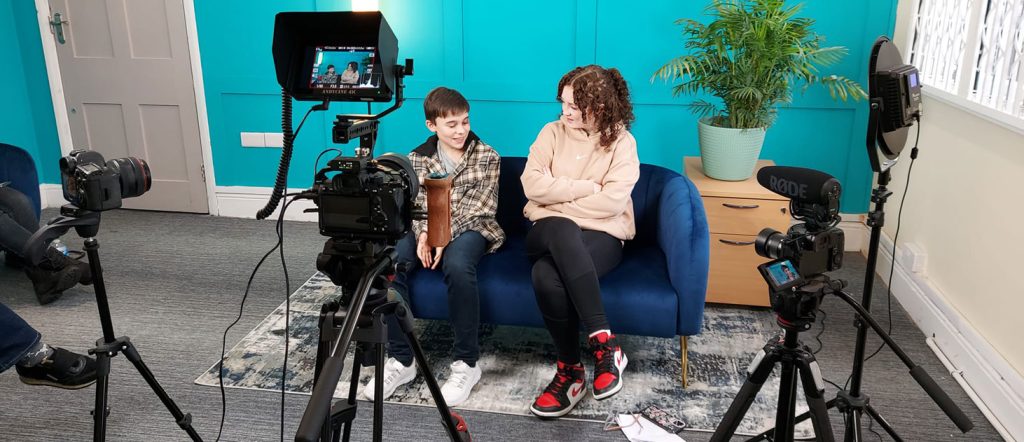
When it comes to budget, using a location that doesn’t include any hiring costs can provide a lot of savings. So filming at the clients office or within meeting rooms etc are far more cost effective than sourcing and hiring a space to film.
Filming equipment for interviews
For a majority of our filming, we opt for a fairly lean approach to the equipment we use. This makes travel much easier, and reduces the time needed for setup and packing up. Crucially, it also means that all of the equipment can be managed by a single operator, which has a big impact on costs.
We use professional DSLR cameras for filming our videos, and they are extremely capable of capturing very quality footage. They are more than adequate for videos used in a controlled environment for an online platform for interviews. Using higher quality cameras such as RED cameras or Cine cameras is likely unnecessary, and will probably increase filming costs considerably.
Ideally we like to film with two cameras. One with a wide-angle lens, showing more of the interviewee and their environment, the second with a zoom lens and a tighter focus on their faces. Sometimes, we also have a third “floating” camera. Rather than being on a fixed tripod, this is handheld and used for capturing other details and unique angles. But of course, this is when you definitely need a second cameraman!
In most cases we use a very simple 2-point lighting system. The primary key light angled to one side of the interview, and a second fill light to manipulate the shadows and get the right look. Sometimes we also use a magnetic strip light which can add a splash of colour into the background, or serve as a rim light. If the location allows, sometimes a well placed lamp in the background might balance out the composition of the shot.
Good quality, clear sound is essential for a professional video. There’s lots of ways you can approach this, but for most interviews, we prefer to use wireless lapel microphones. These are quick and easy to add, minimise background noise, and you can film your interviewee from far away when needed for establishing shots! We use a shotgun microphone on the camera too, but this is primarily just to have an audio stream to synchronise with the separate microphone recordings.

How it looks in the video.
Using teleprompters for interviews
For most interviews, a teleprompter can be a little much for most people. They also require some practice to really use them effectively. Over-reliance on a teleprompter can result in a stilted or robotic delivery, detracting from the authenticity of the interview.
However in the right circumstances they can be incredibly useful. If you have a lot of content to capture, or there is a lot of complexity to what the interviewee is saying, or the message needs to be very precise, then teleprompters can really speed up the filming process.
There are dedicated teleprompter operators you can hire that have their own professional equipment, but these do add to your costs. For a majority of our filming with teleprompters, we use a simply mirror based system and a tablet with a teleprompter app installed. It’s basic, but it actually works very well and is incredibly cost effective.

The importance of a good interviewer
A good interviewer will not only ask good questions, but can also lead, direct, and make the interviewee feel relaxed to get the content you need. In a lot of cases, interviewees feel far more comfortable talking to the interviewer rather than looking directly into a camera lens, and this is a technique used by documentary filmmakers for platforms such as Netflix.

A good interviewer will also help you capture a strong introduction and conclusion. These bookends frame the content of the interview and can provide a summary or a call to action, making your video more impactful.
Even if you have a great interviewer, most of the time videos work best when you’re just hearing from the interviewee. Asking them a question but getting them to include the question in their response is a great way of being able to remove any sound/footage from the interviewer.
For example, if the question is “What inspired you to start your business?” the interviewee should begin with, “What inspired me to start my business was…” This technique helps the interview make sense even if the questions aren’t included in the final edit and makes it easier for viewers to follow the narrative.

Finally, an experienced interviewer will know when to go “off script” with an interviewee. They identify opportunities and ask the right questions, even if these weren’t prepared in advance. Most crucially, they then know how to navigate back to keep on track. But these unscripted moments can sometimes uncover “gold” from the interviewee.
How it looks:
A cost effective way to film videos
So by focusing on strategic planning, being efficient with your time and using a lean filming set up, you can capture a lot of high quality, professional content in a short space of time. Additionally, the added bonus of really planning your shoot in detail, often means that the editing is simple in post production, keeping your editing costs low, which makes it really cost effective.

